Plan concert ticketing in Dubai with an approved seating map and sales schedule, then prepare buyer messages for the tickets released at your concert.
Concert ticketing in Dubai begins with a decision concerning which places your promoter can offer once the public sales link opens. The venue’s advertised capacity provides a starting figure, yet the concert’s production layout determines which areas can accommodate the audience. Your ticketing plan needs an approved allocation that accounts for the stage arrangement and the places retained for other purposes.
Promoters can settle the first release during a meeting in which the venue’s event manager reviews the concert draw alongside the proposed sales calendar. Someone’s Ticket provides event ticketing technology, with event-specific arrangements agreed through its team.
Approve the Concert Layout Used for Sales
Your production manager and venue contact should review the concert layout together so the ticketing team receives a version accepted for that particular performance. Camera positions may occupy areas that appeared available on an earlier drawing. The approved plan should account for any seats affected by the production equipment, with the relevant venue specialist deciding their suitability for sale.
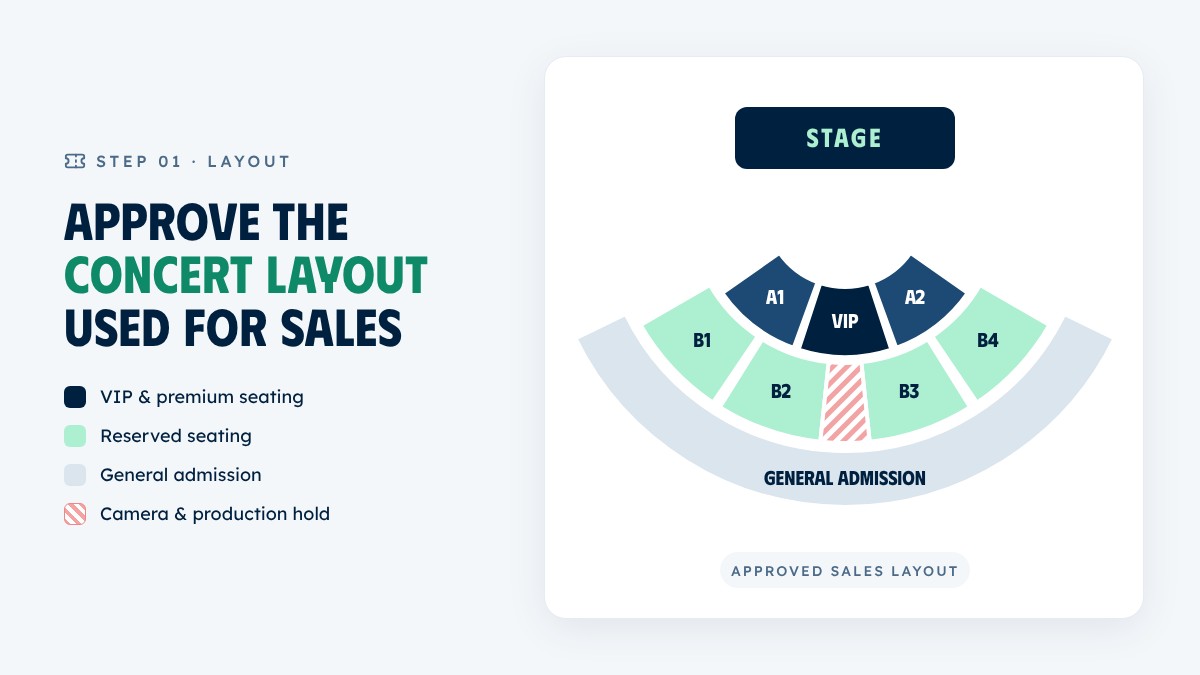
Assigned seating requires a map whose section names and seat numbers match the labels guests will encounter inside the venue. Check a sample booking against the physical location it describes. Someone buying two adjacent seats needs confirmation stating both seat numbers. If the production layout changes during sales, the organizer must examine the affected bookings and approve a response for those buyers. Changing the drawing alone leaves the original seat assignment for an earlier purchaser.
General admission needs its own allocation for the area guests may enter, even when the venue has an overall audience limit. Premium access requires capacity appropriate to the actual offer. Explain the permitted area in the ticket description and confirm the arrangements with the venue. The entrance briefing should use those category names beside the corresponding locations on the venue map.
Calculate the Quantity Available to Buyers
Your sales allocation should begin with the concert’s approved capacity, followed by deductions for places assigned to purposes outside public ticket sales. Artist guest allocations need an agreed quantity. Production holds need a reason and a person authorized to approve their later release. Keep those quantities visible in the event record so the ticketing team can reconcile the public allocation against the accepted plan.
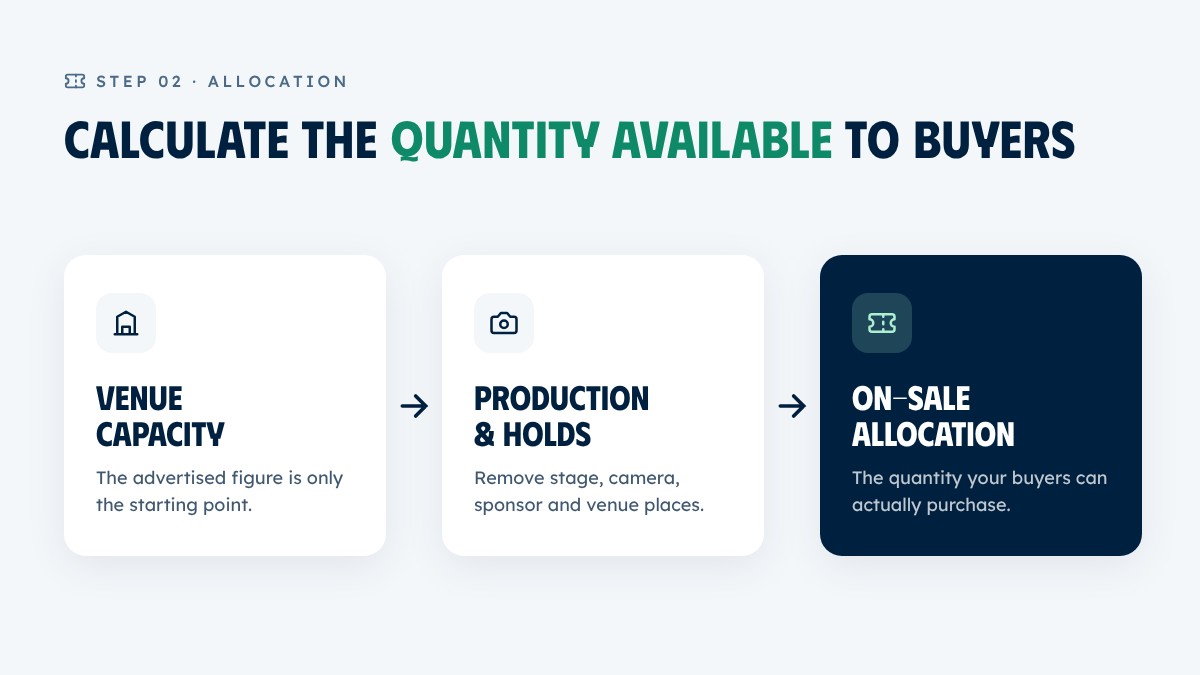
In a hypothetical seated concert, the production manager retains a side block while the crew confirms a camera position beside the stage. The map identifies the affected seats as production holds, with their public availability awaiting that review. Moving the camera might allow the promoter to offer some seats after the venue confirms their suitability. Seats that remain obstructed still require the event team’s decision concerning any proposed sale and the description buyers would receive. Demand for the concert supplies a commercial reason to review the hold; the venue’s assessment determines which places qualify for release
Ticket categories should divide the approved public allocation in a way that your staff can check against the seating map or admission areas. Price bands describe what buyers pay; admission categories describe where their tickets permit entry. Early purchase prices can apply to the same area as later prices. Both sales periods must draw from the quantity approved for that area.
Set a Sales Forecast You Can Revise
Your initial concert sales forecast should use evidence relevant to the artist’s audience in the proposed location and the ticket prices you plan to charge. Prior sales records can help when the earlier concert had comparable conditions. Note the differences that affect the comparison, such as a larger venue or a different performance date. Public social activity can indicate interest. Count completed purchases when reporting actual sales, with refunded orders treated according to the report’s stated basis.
Prepare a cautious sales estimate alongside a higher-demand estimate, with the assumptions stated beside the quantities used in the concert budget. The finance colleague can calculate projected ticket receipts at the proposed prices. Applicable deductions require their own calculation using verified commercial terms. The next forecast can use completed orders to estimate demand separately for the concert’s price bands. Faster sales in the lower-priced area may justify a different projection from the premium area.
Suppose a hypothetical concert sells 120 tickets during its opening weekend after an artist announcement directs fans to the booking page. Treat that period as an announcement-related sales window. Extending the same daily rate through the remaining weeks would require evidence that comparable demand will continue. Your next review can examine the later sales period and the remaining available quantities.
Agree on the Sales Calendar and Dubai Approvals
The sales calendar should distinguish the planned announcement from the point when approved tickets become available for purchase through the appointed seller. Dubai’s event permit guidance requires a permit for entertainment events and directs applications to the e-Permit portal. The concert’s permit work belongs with the organizer responsible for the event application.
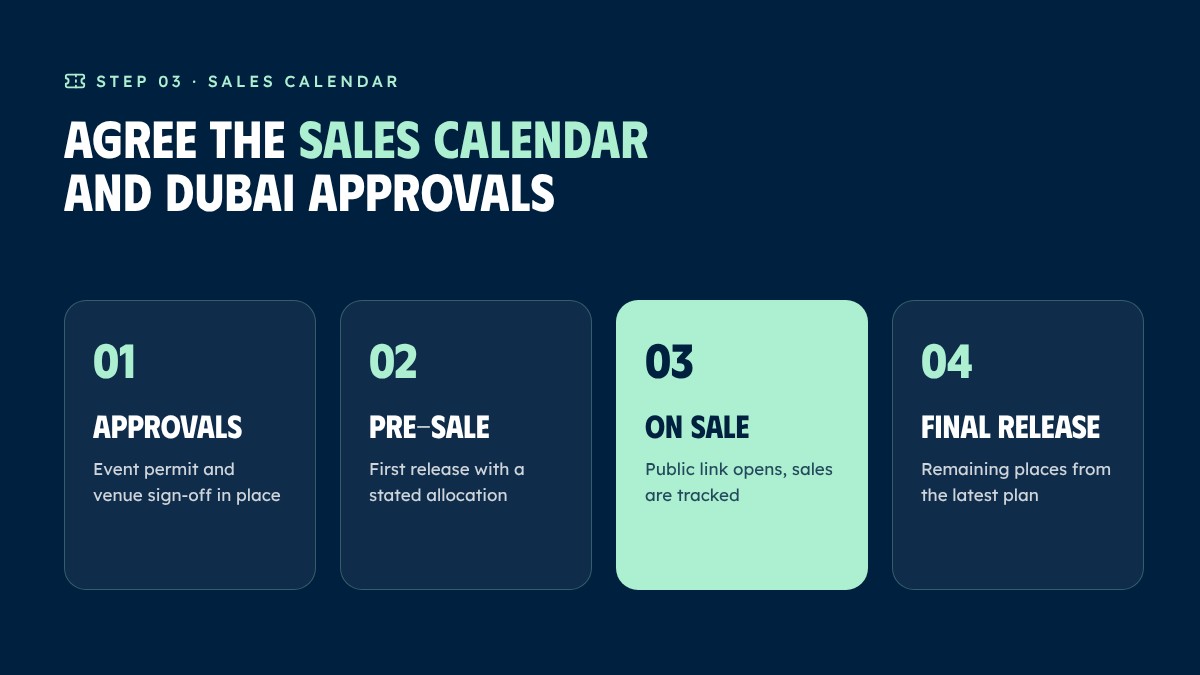
DET’s ticketing application guidance states that organizers holding a valid ticketed-event permit must apply for ticketing and select an approved ticket seller or registration provider. The concert schedule needs to allow for that separate application. Announcing a purchase time creates an expectation among fans, so the organizer should confirm the applicable approval position with its appointed seller before making that announcement.
Presales need an allocation and a stated eligibility rule so staff can explain who may purchase during the earlier sales period. Set the closing condition in advance: a date or the exhaustion of the assigned quantity. Consider a hypothetical fan presale that ends on Friday evening. If unsold places are included in Saturday’s general sale, the approved ticket instructions should explain the transfer to the staff preparing the release. The public message should state that Friday’s deadline is the presale’s closing time.
Check the Ticket Offer and Delivery Message
Buyer-facing descriptions should explain the admission purchased in language that matches the concert’s agreed seating plan and any included hospitality arrangements. Consider a hypothetical premium concert ticket that includes a lounge visit during a stated period. Buyers need that period in the description, together with the arrangements for reaching their performance seats for the show. The venue colleague responsible for the lounge can check the description against the planned access.

Ticket delivery needs a stated schedule that buyers can find during purchase and refer to upon receiving the order confirmation. Order confirmation may arrive earlier than the admission ticket if the concert uses a later ticket release. Explain the scheduled delivery in that confirmation and include the contact route for a buyer whose ticket has not yet arrived. The event’s actual arrangement governs the wording; the provider should confirm it for the proposed concert.
Door time and performance time should be in separate, labeled fields so guests can plan their arrival around the concert’s actual schedule. Use the venue-confirmed entrance in the arrival message. If a later instruction changes that entrance, the event lead should approve an update for affected buyers. Guests who bought during the first release also need the revised directions, even if their tickets remain valid.
Review Releases Against the Latest Concert Plan
Later ticket releases should follow a documented decision by the person responsible for the affected allocation, after the venue has confirmed the available places. Production holds can remain necessary until the stage arrangement receives its final review. The release instruction should identify the seats concerned and state their approved price. Ticketing staff can then compare the proposed change with the current map. The organizer needs to address any required approval amendments as part of that decision.
Concert admission preparation should use the current category descriptions so the entrance supervisor can check a sample ticket against its permitted area. Include a booking that needs assistance during the rehearsal, then confirm where the staff will direct the buyer for investigation. Suppose a hypothetical guest presents a ticket for a premium area at a general admission entrance. Staff need to identify the ticket’s permitted location and use the venue’s approved directions. The rehearsal can expose a mismatch between a ticket’s category name and the signs guests will follow.
Discuss Your Concert Ticket Plan
Your concert brief can support a discussion with Someone’s Ticket once the proposed seating arrangement and sales timetable are ready for review. Consult the company’s organizer information, then contact the team with the event date and venue. Ask which ticketing arrangements are available for the proposed admission format. Request confirmation identifying who will enter the approved allocations and receive later release instructions. Send the accepted concert map with that brief, so the discussion focuses on the places you intend to sell.
Barbaros Bugra
Event Ticketing