Review ticket checkout abandonment with checks for purchase interruptions and form errors, then agree a tested correction for your UAE event sales.
Your ticket checkout abandonment review starts with the buyer who selected an event and then left a purchase unfinished, often somewhere between a ticket choice and an order confirmation. For an organizer, the useful question concerns the reason for the interruption. Someone comparing the final price needs a different response from a buyer whose phone rejected an email address. Investigate the point where the purchase stopped, then assign a correction supported by the available evidence.
Locate the Interrupted Purchase
Your analyst needs an agreed starting point for checkout and a completion rule tied to confirmed purchases, with both applied to the same event and reporting period. Google's ecommerce event documentation distinguishes checkout initiation from purchase activity. Ask the reporting specialist to verify those signals on the actual ticket route. If a buyer returns later to complete an order, the report needs a stated attribution window for connecting the purchase to the earlier attempt.
For a useful operational review, group interruptions according to the screen or action immediately preceding the exit, alongside the device category used for the attempt. Several departures at an attendee-details form justify inspection there. After an apparent exit following payment, reconcile the attempt against the order record. Browser activity alone leaves uncertainty concerning the transaction's final state; the ticketing provider's confirmed outcome belongs in the investigation.
Explain the Payable Total Early
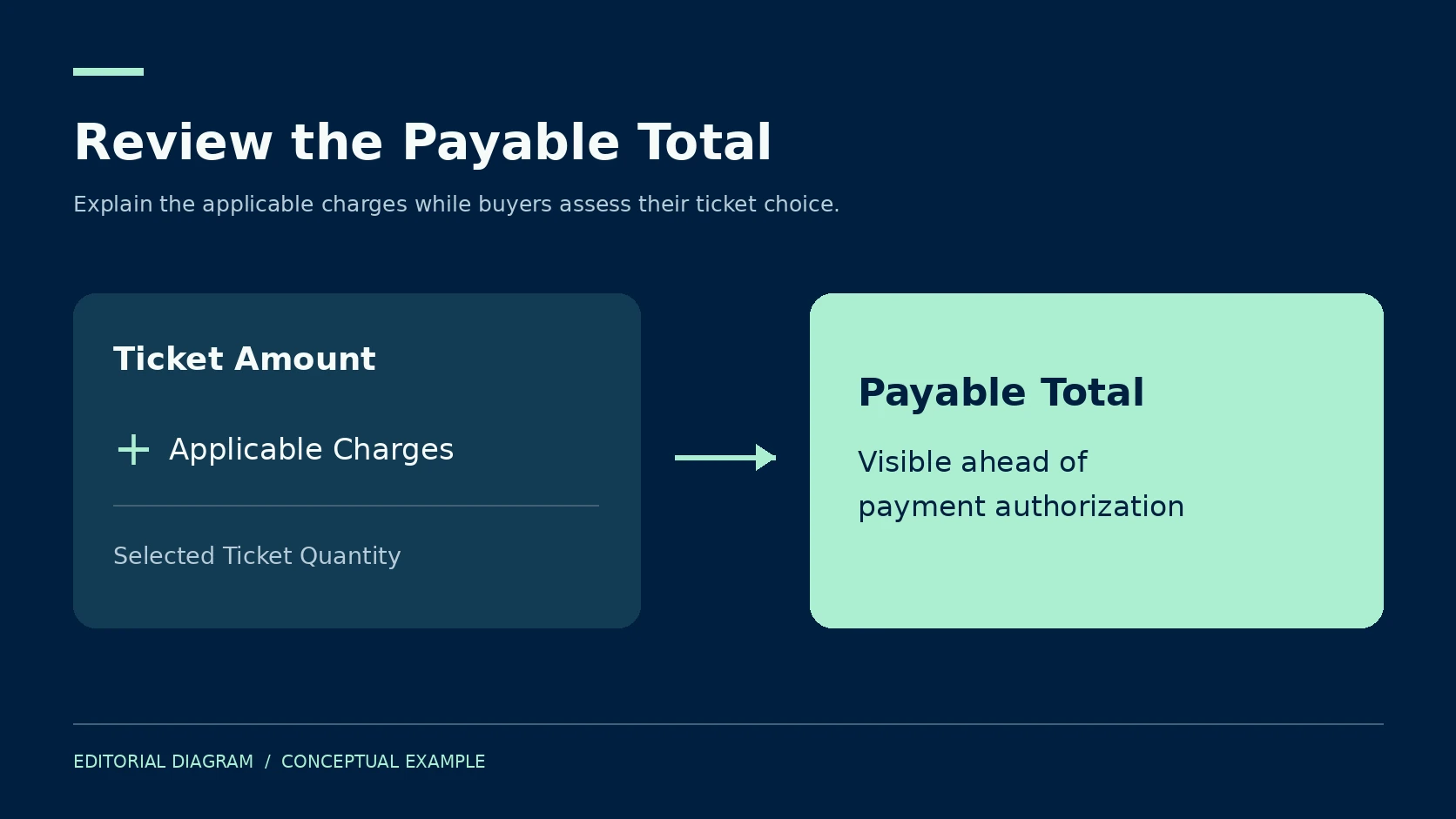
Buyers evaluating tickets need the total payable for their selected quantity while they still have enough context to compare categories and decide whether to attend. Show the applicable charges beside the ticket amount, with the resulting total visible ahead of payment authorization. If a charge changes with quantity, update the displayed calculation when the quantity changes. Match the event page's price explanation to the actual checkout calculation.
For an optional addition, explain its price and retain the buyer's choice when the order summary updates after a ticket-category change. Review how the final total appears on a narrow phone screen. Important information placed far below a payment button is easy to miss during a quick purchase. Compare the visible total with the approved ticket pricing plan, then ask the responsible commercial colleague to resolve any discrepancy.
Discount fields deserve a separate review when buyers pause their purchase to search for a code mentioned near the final total. If an offer requires a code, state the applicable eligibility in the offer's own message. Expired promotions need an accurate explanation at redemption. The checkout team can then distinguish a rejected code from a payment problem when reviewing buyer reports.
Ask for Information the Purchase Requires
Your form review needs a reason for every required field and an explanation identifying the purchaser or individual attendee as its intended subject. Questions retained solely for later research add work during purchase. Move optional audience research to an appropriate later interaction, subject to the event's approved data practices. For an event requiring named tickets, explain whose name belongs in the relevant field.
Google's guidance on payment forms recommends browser autofill and suitable input controls to reduce manual entry, with guest checkout as the default where available. Ask the provider which changes the event's setup supports. Test the available route using a phone's ordinary keyboard. If a contact field expects a specific format, place the instruction beside its label so the buyer sees it during entry.
International attendees may enter names using different alphabets or provide an address formatted for another country, so validation rules deserve tests drawn from the audience the event expects. The responsible technical team needs to approve those tests using fictional information. Retain legitimate required data throughout the review. Any change to account requirements belongs with the provider's authorized configuration decisions, alongside the event's ticket-access arrangements.
Help Buyers Correct Form Errors
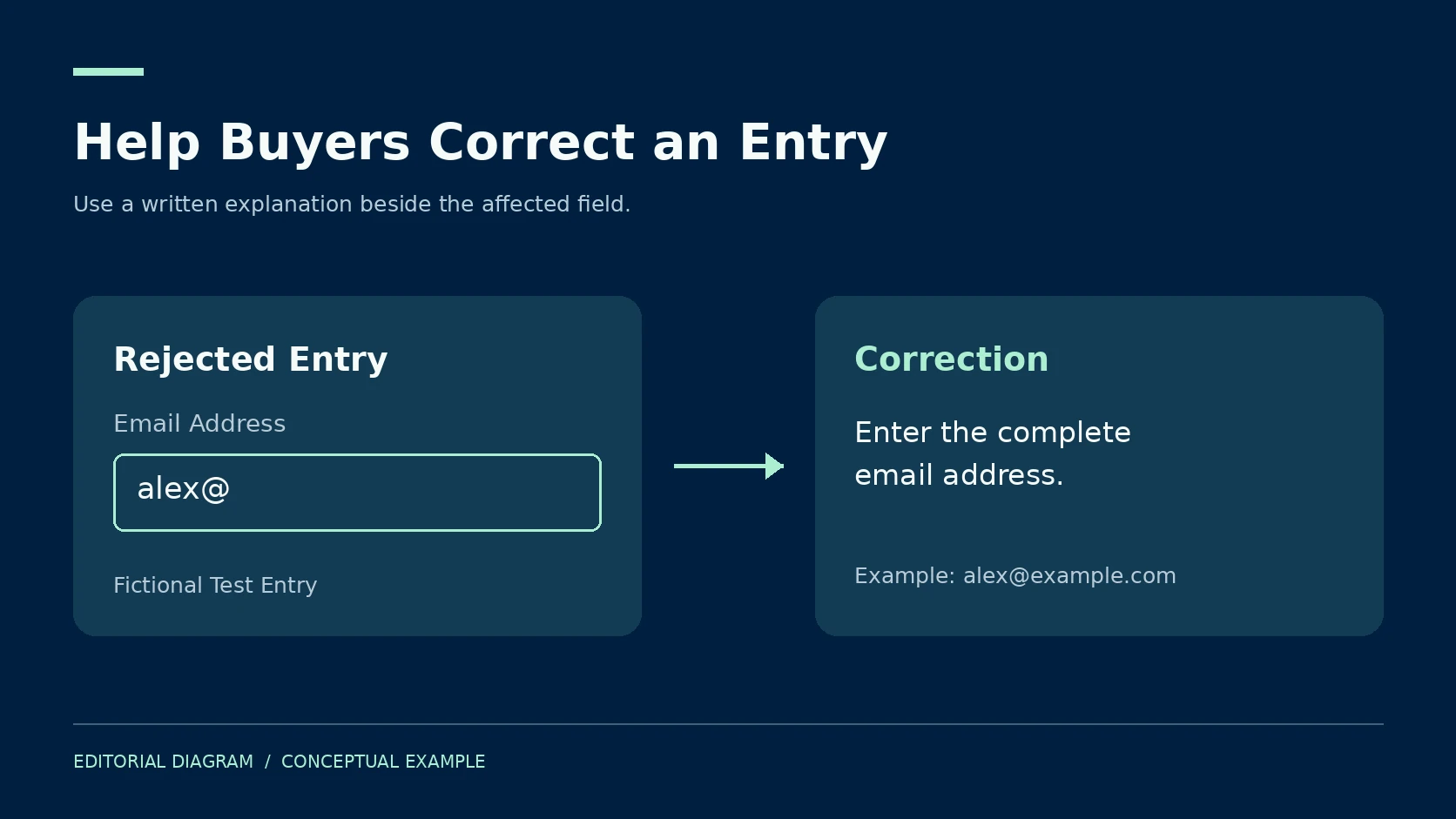
When a form rejects an entry, identify the affected field and explain the correction in language a buyer can apply while the purchase remains open. W3C's form notification guidance recommends text describing the error, supported by a route back to the relevant control. Pair any colored border with a written explanation. Ask the technical reviewer to check whether assistive technology announces the message when it appears.
For a fictional email-entry test, omit the address's domain and inspect the response displayed after the form is submitted through the approved test route. The message needs to describe the missing part. Retain permitted entries in the other fields so the correction concerns the faulty address. Repeat the test on a phone to check whether the error appears within the visible area or requires an understandable route back to the field.
Reconcile Payment Interruptions with Order Status
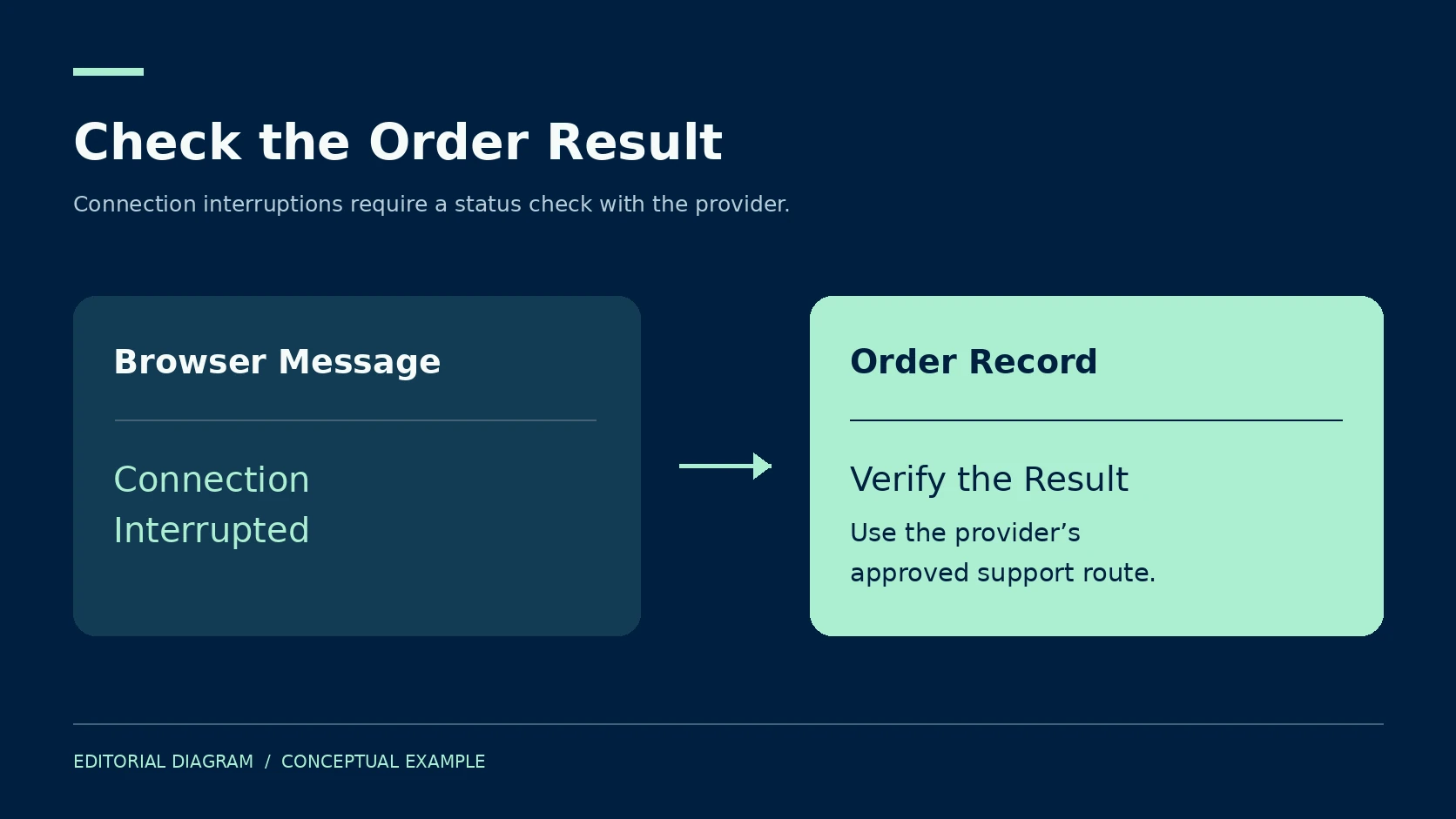
If a connection fails after payment, the buyer needs a reliable order-status check to establish whether the purchase reached a confirmed outcome. Ask the provider how its support team distinguishes a pending result from a confirmed order. The buyer-facing message needs an appropriate status-check route. For an uncertain outcome, direct the buyer to the provider's support procedure so the existing transaction receives review.
Payment troubleshooting requires an agreed support boundary when the organizer receives a complaint concerning a failed or interrupted purchase during the event's sales campaign. Use the provider's approved reporting method to record the attempt time and the message the buyer saw. Sensitive payment data belongs in the provider's protected support process. The organizer's issue log needs only the information approved for the issue log.
For a reported technical fault, the provider's authorized tester needs to reproduce the affected route and verify its correction against the order outcome. Confirm which payment methods are actually available for the event. Any proposed addition requires a provider assessment of eligibility and cost. Keep technical tests in the approved test environment, with the result documented against the original issue.
Make a Return Visit Useful
People coordinating attendance with friends often need time to agree on a date or ticket category, so a return visit deserves a factual explanation of current availability. State the reservation rule wherever a temporary hold applies. If the hold expires, explain how the buyer checks the tickets currently available for purchase. Explain whether the saved selection retains inventory or simply records the earlier ticket choice.
For any permitted recovery message, the responsible team needs an approved contact basis and an accurate account of the event's current sale conditions. Check current availability and the destination link during the message review. If the earlier category has sold out, describe only the current offer. Buyers who completed their orders belong outside an unfinished-purchase audience, and recipient preferences require the appropriate exclusions.
Recovery discounts deserve a commercial decision tied to the actual reason for the unfinished purchase and the event's existing ticket offer. If a form error caused the interruption, correct the error first. Specify the revised offer's eligibility rules when a concession receives approval. Compare the proposed cost with the expected additional purchases using an explicitly stated estimate, then retain the assumptions for review.

Test the Correction against the Original Problem
Your checkout test needs a written expected result for the affected action, with the provider's authorized tester responsible for confirming the saved order outcome. For the test preparation, compare the selected ticket with its displayed total. After a correction, repeat the previously failed interaction on the relevant device. Retain the test result beside the issue so another colleague can verify what changed.
For the next reporting period, compare the same checkout cohort definition against confirmed purchases and document any concurrent change to the event's offer. Account for any different audience or ticket release in the comparison. Review the event's sales measurement rules when reports disagree, then evaluate the correction after the affected activity has been reconciled. Small samples deserve a longer observation period when the sales timetable permits one.
Questions on Ticket Checkout Abandonment
Does an Unfinished Checkout Mean a Lost Sale?
Within the selected reporting window, an unfinished checkout records an incomplete attempt whose buyer may return later to complete the order. Connect the records using the approved reporting method and a stated time window. Treat unresolved payment outcomes as a separate investigation until the provider confirms their status.
Which Checkout Change Deserves the First Test?
The first test needs to address a reproducible problem associated with the event's interrupted purchases, with the affected device included in the test plan. If buyers report a rejected contact field, inspect its accepted formats and error message. Record the expected correction so the review answers a specific question.
When Is a Recovery Message Appropriate?
Recovery contact requires the responsible team's approval for the intended recipient group and accurate information concerning the tickets currently offered for sale. As the audience is selected, check the buyer's current order status. Keep the message consistent with the approved contact permissions and stated recipient preferences.
Discuss the Purchase Route with Someone's Ticket
Organizers reviewing ticket checkout abandonment can contact Someone's Ticket with the affected event and a concise description of the observed interruption. Include the relevant device category in the request. Ask which checkout adjustments are available for the event, then agree on an approved test and the evidence required to confirm the result.
Barbaros Bugra
Event Ticketing